 Image 1 of 5
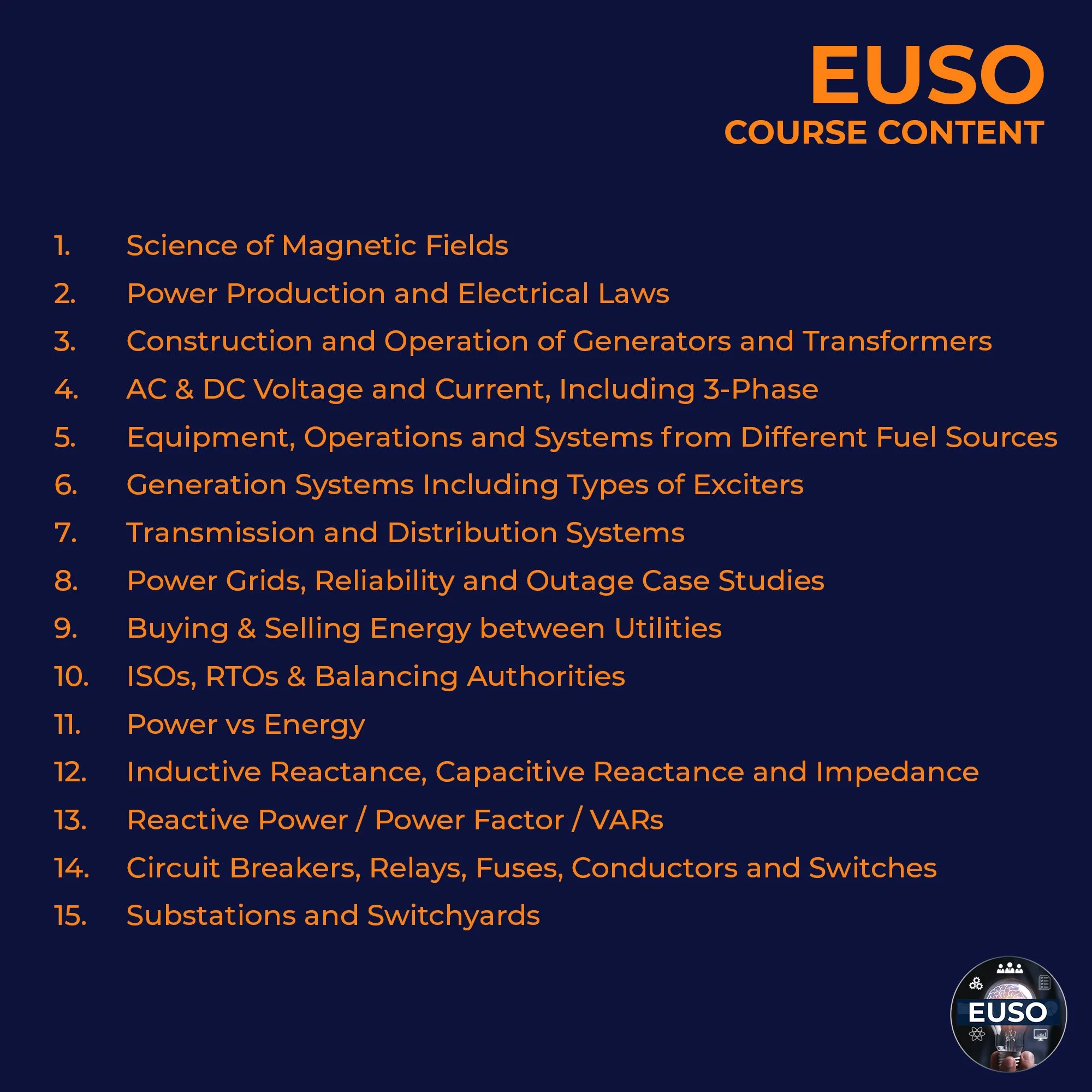 Image 2 of 5
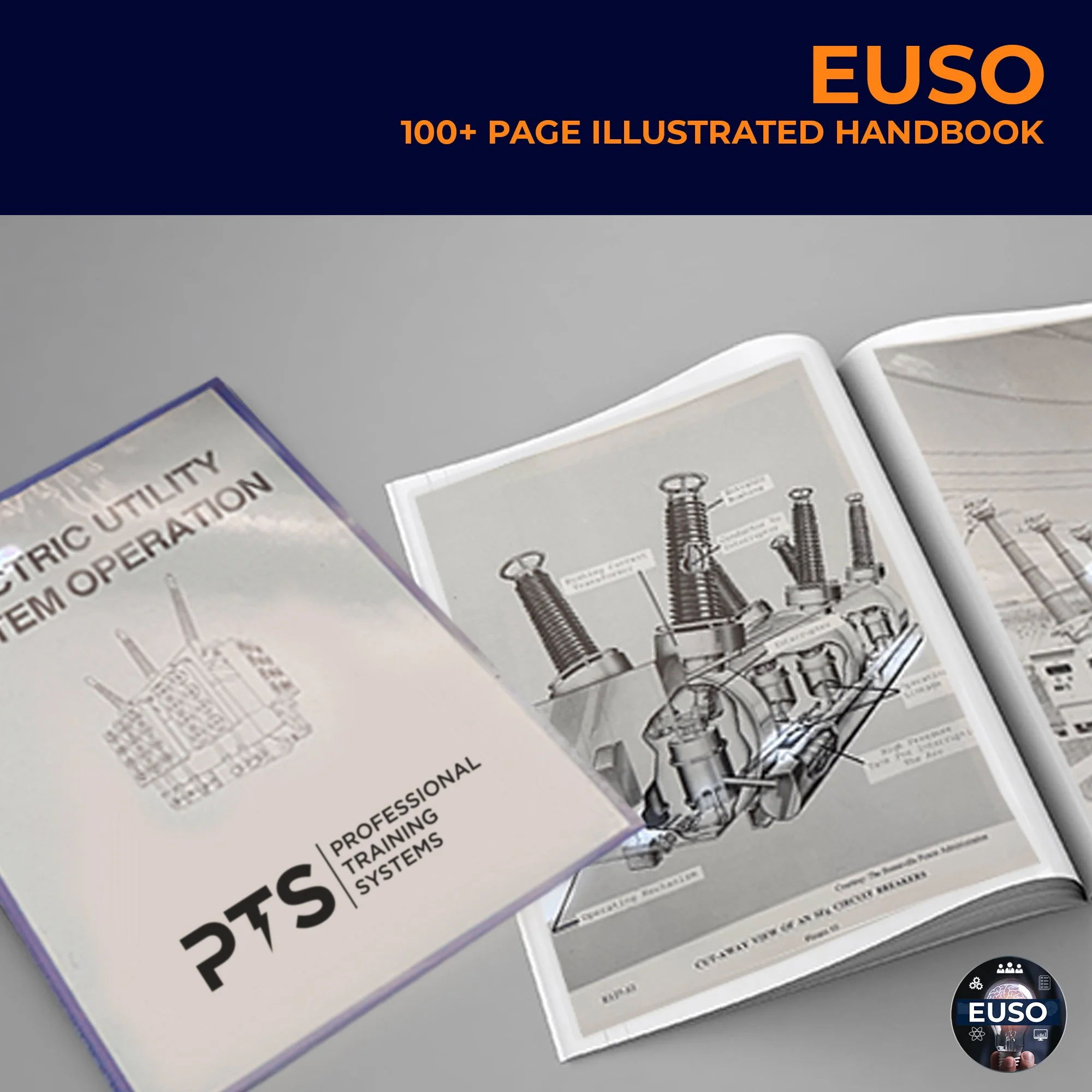 Image 3 of 5
 Image 4 of 5
 Image 5 of 5
Registration Notes
If enrollment is closed due to full enrollment, email us at PTS@utilitytraining.net with the number of registrants, city and state of your utility. We will put you on a waiting list for seats if there are cancellations. We will also let you know if a second class is scheduled in the area.
Class Description
The 2-day version of the EUSO class is designed for people in technical positions who have less than 6 years of experience, and people not in technical positions regardless of their years of experience. It covers the equipment and basic operations from generator to customer. The class explains how electrical energy is created at the various generating resources, and follows the energy into a toaster in a residence.
The class begins with a description of voltage and current for both AC and DC. Single phase and 3-phase generators are explained including how generators are built and the advantages of 3-phase. The methods used to spin a generator’s rotor come next describing steam, water (hydroelectric), wind, jet engines (gas turbines), reciprocating engines and tidal action. This is followed by a description of an electrical system from generator to house, as a preview of what will be covered, showing the substations with their transformers, transmission lines and distribution lines.
Grounding is covered next, followed by the relationships of voltage, current, power, demand, load and energy. Substations come next beginning with the power transformer, showing how it is built, the wye versus delta connections, cooling systems, and methods of preventing water from getting into a transformer. Other standard substation equipment is then covered including circuit breakers, circuit switchers, fuses, voltage transformers, current transformers and protective relays. The difference between a substation and switchyard is explained.
Pole mounted and pad mounted transformers serving customers are covered followed by voltage control in substations and in distribution lines using load tap changers (LTC,TCUL, OLTC), no load tap changers (NLTC) and voltage regulators. Autotransformers and lightning protection are included. Because a power transformer is the most important piece of equipment in a substation. and everything in a substation is there for the power transformer, every item on a power transformer nameplate is explained using a photograph in the book of the nameplate.
The class ends with the instructor taking the class through a system drawing in the book from generation to customer asking the class to identify the equipment they see in three substations and in two switchyards.
What does EUSO Cover?
Science of Magnetic Fields with Respect to:
Generators
Transformers
Electrical Safety
Power Production and Electrical Laws
Construction and Operation of Generators and Transformers
AC & DC Voltage and Current, Including 3-Phase
Equipment, Operations and Systems from Different Fuel Sources
Generation Systems Including Types of Exciters
Transmission and Distribution Systems
Power Grids, Reliability and Outage Case Studies
Buying & Selling Energy between Utilities
How Generators Produce Power without Changing Operating Speed
AGC
ACE
Wheeling
ISOs, RTOs & Balancing Authorities
Power vs Energy
Inductive Reactance, Capacitive Reactance and Impedance
Reactive Power / Power Factor / VARs
Circuit Breakers, Relays, Fuses, Conductors and Switches
Substations and Switchyards
Copyright - Professional Training Systems, Inc.